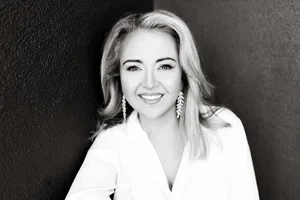
Born Without a Brain: What Alex Simpson Teaches Us About Consciousness
In the domain of human experience, we often regard the brain as the seat of consciousness, personality, emotion and the self. Well, the domains of science and medicine certainly do. Yet the story of Alex Simpson offers a profound challenge to that assumption and invites us to consider what psychology can learn from cases where the “normal” brain architecture is profoundly altered. I read that Alex was born with a rare condition called Hydranencephaly in which most of the cerebral hemispheres are absent or replaced by fluid spaces and yet, against the odds, she has now reached 20 years of age and appears to interact with her environment in ways that raise deep questions about mind, awareness and connection.
I can’t stop thinking about this and wanted to explore what this case (and what related research Chat GPT could find for me) might tell us about the nature of human mind and brain; what implications there are for my practice (including how we conceptualise human capacity, presence, relational sensibility, trauma healing… my mind literally shorts circuits thinking about this); and how therapy might engage with the humanness of mind in ways that honour complexity rather than pathology.
Understanding the condition and the anomaly
Hydranencephaly is an extremely rare developmental anomaly in which the cerebral hemispheres (the large outer parts of the brain responsible for much of our sensory processing, cognition, language and higher-order integration) are largely absent and replaced by sacs of cerebrospinal fluid. In the case of Alex Simpson, I read that her parents report that only a tiny fragment of cerebellum remains, something described by her father as “about the size of my pinky-finger.” From a medical perspective the prognosis for such children is typically very poor: many die in infancy, and survivorship into childhood or adulthood is extremely rare. You could have told meet that life was not sustainable in such cases at all and I would not have questioned it for a second, but there you go.
What makes this case remarkable is not simply survival, but also reports of meaningful responsiveness, relational presence, emotion, recognition of familiar others, and a sense of being grounded in a family and community context despite the absence of the “expected” brain structure. For example, caregivers in larger surveys of children with hydranencephaly have reported that such children show consistent responsiveness to familiar voices, modulate their expressions in ways suggestive of emotional states, and sometimes show initiative or preference.
What might this tell us about the mind and brain?
From a psychological vantage point, several themes emerge.
Firstly, the relationship between brain structure and consciousness is less straightforward than assumed. Traditionally neuroscientists assumed that the cortex (and something called the thalamo-cortical networks) are necessary for consciousness and subjective experience. However, Alex’s story challenges the notion that consciousness requires a full, intact cortex. According to ChatGPT, landmark caregiver survey found that children with hydranencephaly exhibited behavioural features incompatible with a purely vegetative state (including purposeful eye movements, emotional facial expressions, and consistent responses to familiar voices or physical touch, behaviours that suggest a degree of awareness and intentionality rather than reflexive or automatic functioning). For psychologists, this opens a more humble and complex view of human awareness and subjectivity.
Another thought is that the human mind and relational capacity may transcend what we expect from ‘normal’ brain anatomy. The reports of Alex responding to emotional atmosphere (“If someone’s stressed around her … she’ll know”) and of a sense of presence despite loss of traditional sensory pathways suggest that relational connection, emotional attunement and presence may not entirely depend on intact high-level cognitive processes. Whilst much remains unknown, this invites us to include in our therapeutic gaze the possibilities of human connection beyond conventional cognitive abilities. For me this seems like ‘proof’ of what I have been teaching my clients for some time now - that our emotions are our GPS for life and that we pay too much attention to our thoughts and cognitive processes.
The role of environment, caregiving, meaning, and embodiment is also emphasised in Alex’s story. Her longevity and the family’s framing of her survival as tied to love, attentive care and relational scaffolding reminds us that human flourishing is not just an intra-cranial matter. Okay, so I don’t think this point is anything revelational. There is lots of research and theory which points to the power of human relational fields, meaning-making and supportive environments to propagate good mental and physical health as well as peace, happiness, and contentment. But it is a little more evidence that love and connection are important to survive and thrive.
Finally (although I have many more thoughts on this subject), it invites reconsideration of human difference, capacity, dignity and quality of life. Historically, clinical practice has sometimes operated through capacity-deficit models: if the cortex is absent, then cognition is impaired; if cognition is absent, then relational potential is absent. But the empirical work with hydranencephaly shows that many such individuals may have inner experience, emotional responsiveness and relational presence which raises important ethical, therapeutic and conceptual questions: what does it mean to be human, to connect, to sense, to respond in someone whose brain structure is radically different? Again, I don’t think this is anything radically new, just ask any parent of a child with a severe intellectual disability and they will tell you stories of deep connection, love, and awareness. However, the difference with Alex is that the actual brain structure isn’t even there so it can not be concluded (as we might in the case of severe intellectual disability) that these responses must still be coming from the brain, we just don’t have the technology or skills to detect or determine how or where.
Implications for psychological practice
As a psychologist, I am going to reflect on how this case invites shifts in how I engage clients, neuro-diversity, relational presence and my therapeutic posture. It is making me question how I hold space for human difference and relational presence beyond capacity. When working with clients whose cognitive or neurobiological capacity is significantly altered (for example, brain injury, neurodiversity, trauma, even personality disorder), it can be tempting to default into a deficit-oriented stance: “What is missing? What cannot be done?” But Alex’s story invites a posture of curiosity: What is present? What relational, emotional, embodied, emergent capacities remain? How can we meet the person at the level they are and walk with them through to a place of greater peace and happiness?
I think this story also supports the current thinking around trauma and the increased attention to somatic processing interventions, techniques and practices. In therapy we have often emphasised cognition, insight, and reflective awareness. But Alex’s story invites attention to embodied responsiveness, affective attunement and presence. Anyone who knows anything about trauma and attachment will know what I mean when I quote Bessel Van de Kolk and say “the body keeps the score”.
It also raises some interesting points for psychologists who work with rehabilitation, palliative care, couples work and family therapy however these are not my areas of practice so I won’t dive into those spaces here.
This story ultimately highlights for me how the human mind and brain is wonderfully diverse and the importance of maintaining curiosity and practicing reflectivity. Cases like Alex Simpson remind us that our psychological frameworks must be expansive enough to hold difference, paradox, mystery and relational wonder. They invite humility in how we think about consciousness, presence and human capacity. They invite attention to relational fields, embodiment, meaning, attunement and connection rather than only cognition, diagnosis and capability.
In your clinical practice you may not often meet someone without a cortex. However, the lessons from this case carry wider relevance: how we relate to people whose neuro-functioning deviates from “norm”; how we meet relational presence rather than just cognitive performance; how we support families and caregivers in meaning-making, presence, relational attunement. Therapy then becomes not just a site of cognitive change but a relational, embodied, meaning-rich space where human dignity and difference can be honoured.
References
Aleman, A., & Merker, B. (2014). Consciousness without a cerebral cortex: A challenge for neuroscience and medicine. Hydranencephaly Foundation. Retrieved from [https://hydranencephaly.com/wp-content/uploads/2024/06/AlemanMerker2014print.pdf
KETV News. (2025, November 8). Omaha family’s daughter born with nearly no brain still thriving at 20. Retrieved from https://www.ketv.com/article/omaha-family-daughter-born-with-nearly-no-brain/69274152
Local 12 News. (2025, November 8). She’s a fighter’: Baby born with nearly no brain still alive 10 years later. Retrieved from https://local12.com/news/nation-world/shes-a-fighter-baby-born-with-nearly-no-brain-still-alive-10-years-later-hydranencephaly-rare-condition-cerebellum
Pediatric Brain Foundation. (n.d.). Hydranencephaly. Retrieved from https://pediatricbrainfoundation.org/hydranencephaly